Launch offer — valid today only

📄 Digital book in PDF · read it on your phone or print it

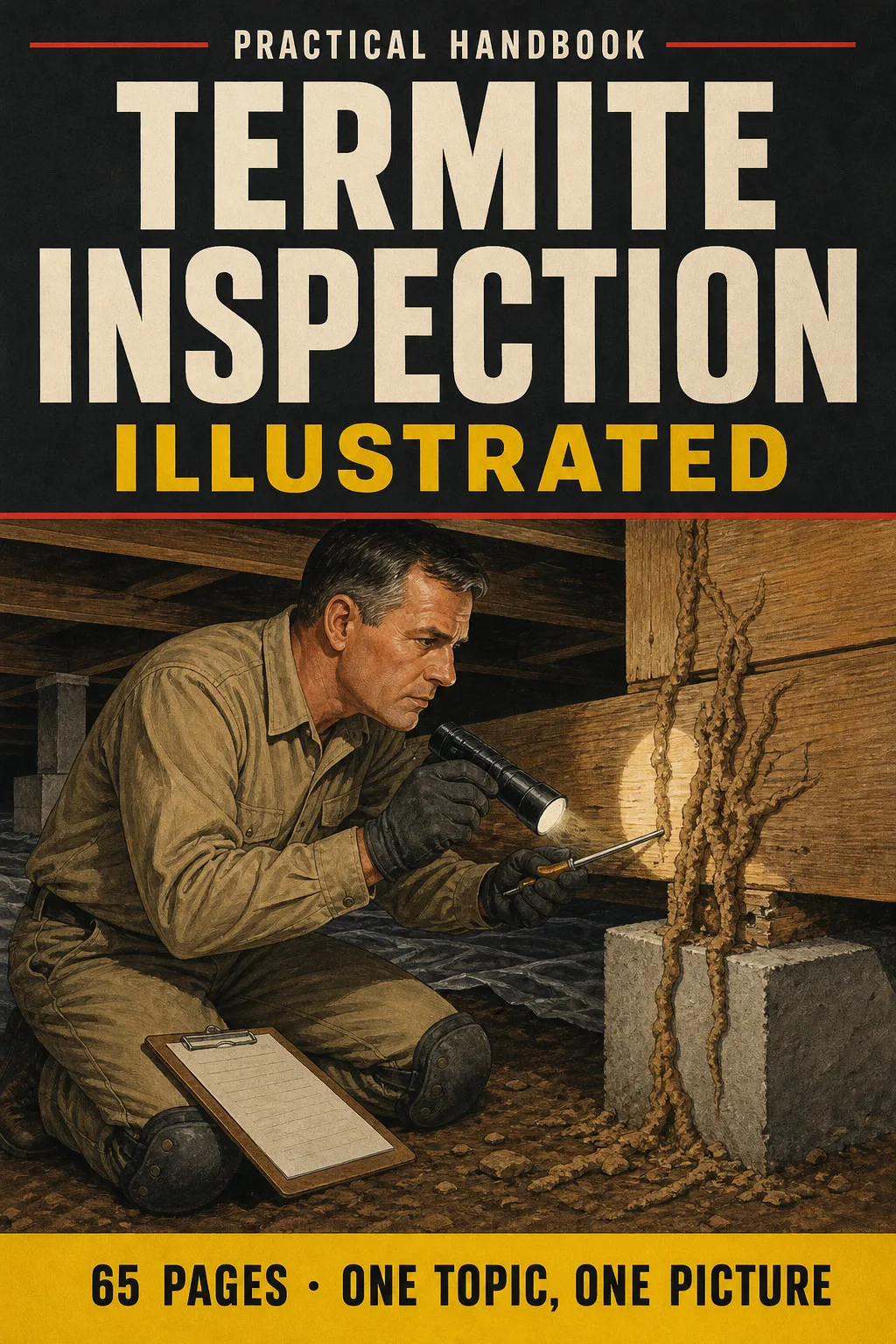
Termite & WDO Inspection, Illustrated: Know Every Sign and Run the 7-Step Inspection One Topic on Every Page

The 3 termite groups, the 4 mud tubes, drywood pellets, look-alikes, construction, the 7-step inspection and the NPMA-33 report. One topic per page: first the drawing, then what to remember. 65 illustrated pages.

START STUDYING THIS WAY

🔒 Secure checkout · PDF by email · 30-day guarantee

Every topic, its own pageEach termite, sign and inspection step drawn, with the explanation right beside it
65 illustrated pages9 parts, from how a termite colony works to the 7-step inspection on one page
Up-to-date sourcesState termite/WDO study materials (CA, FL, TX), the NPMA-33 and EPA product labels
PDF by emailFormat

Look Inside the Book

Every page has one big drawing and a box with the signs, numbers and steps you need to know:

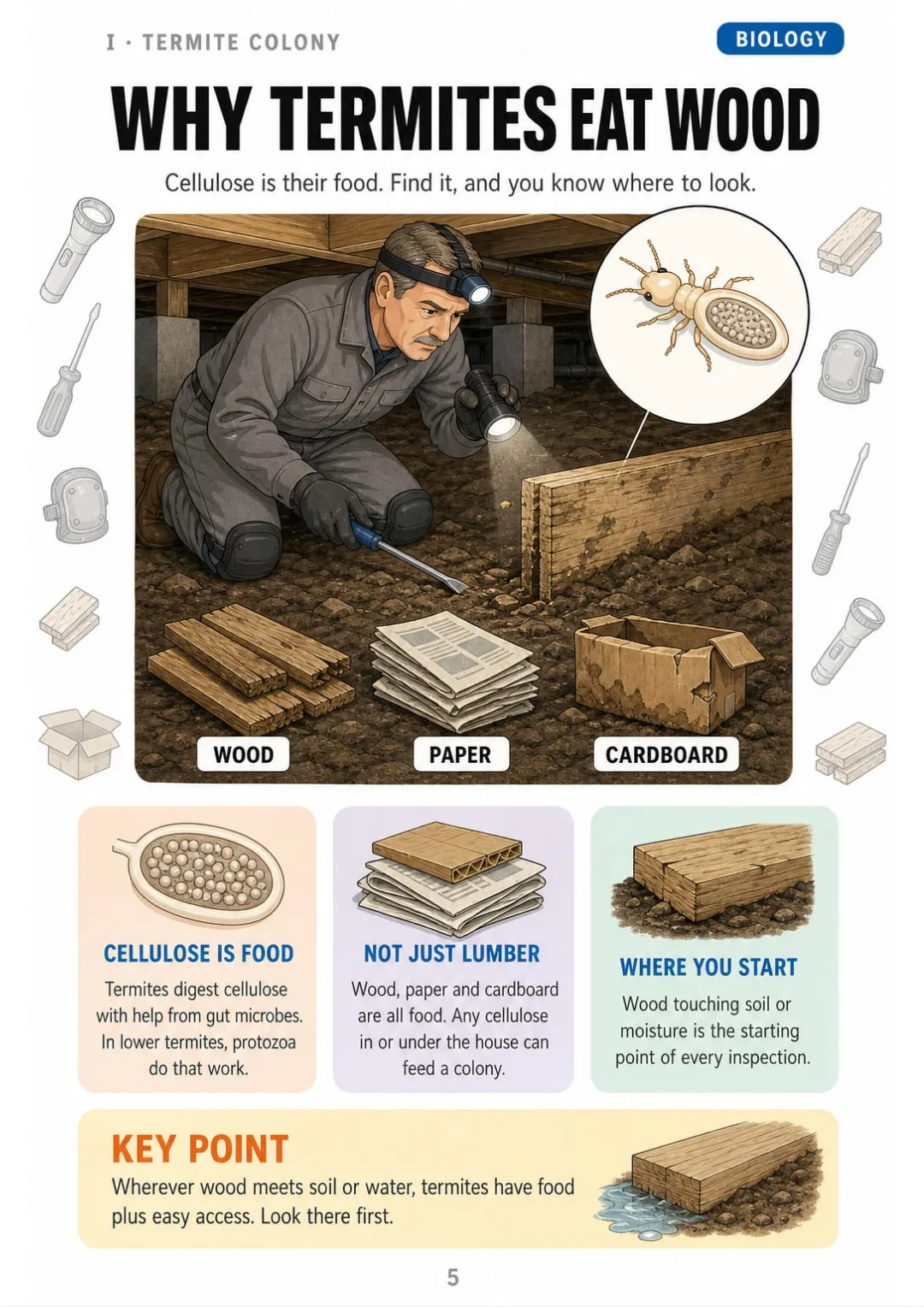
Wood, paper and cardboard are all termite food: start where wood meets soil or moisture.
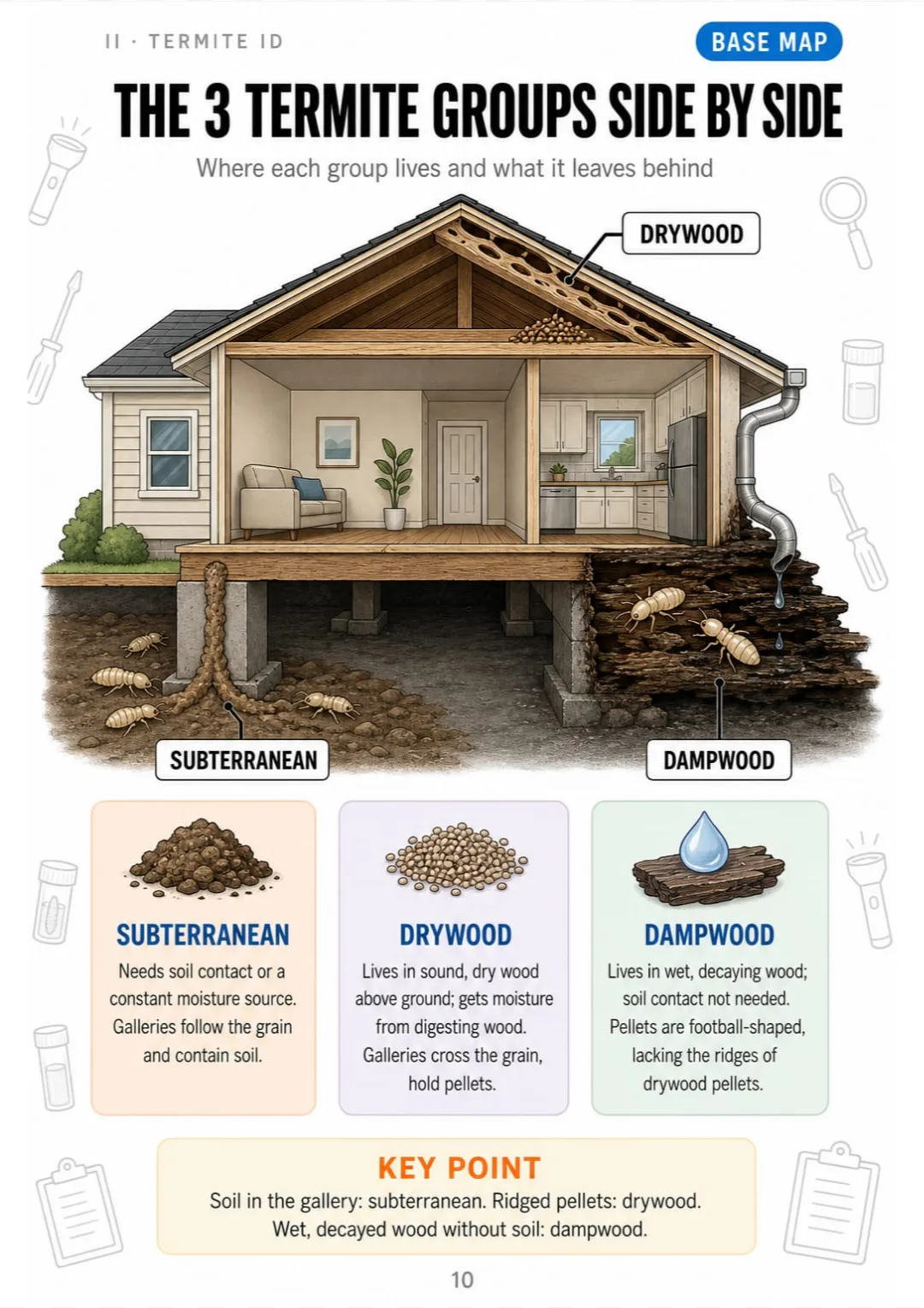
Soil in the gallery = subterranean; pellets = drywood: the whole group on one page.
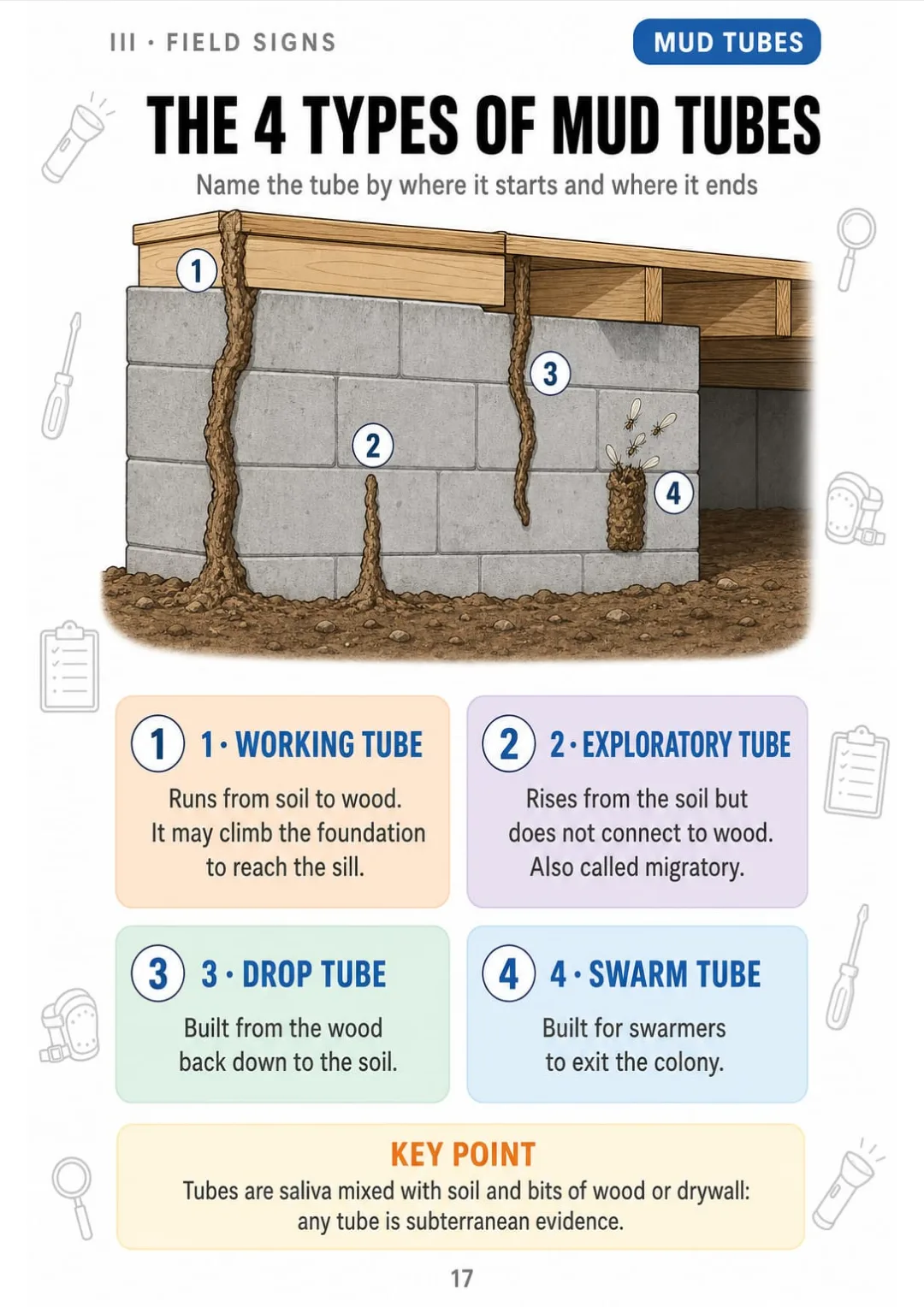
Working, exploratory, drop and swarm tubes, each drawn on the foundation where you find it.
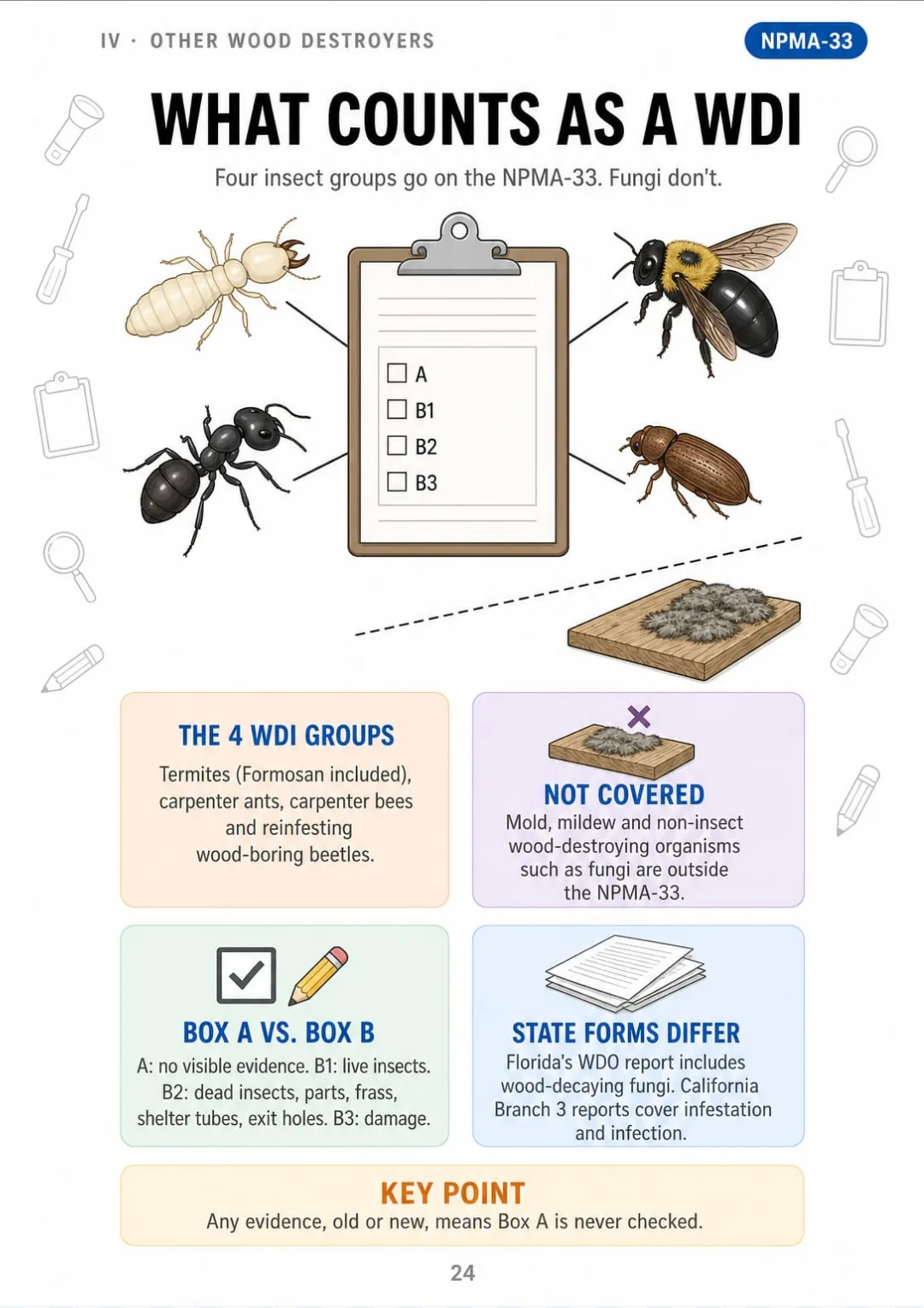
NPMA-33 WDIs: termites, carpenter ants, carpenter bees, reinfesting wood-boring beetles. Fungi excluded.
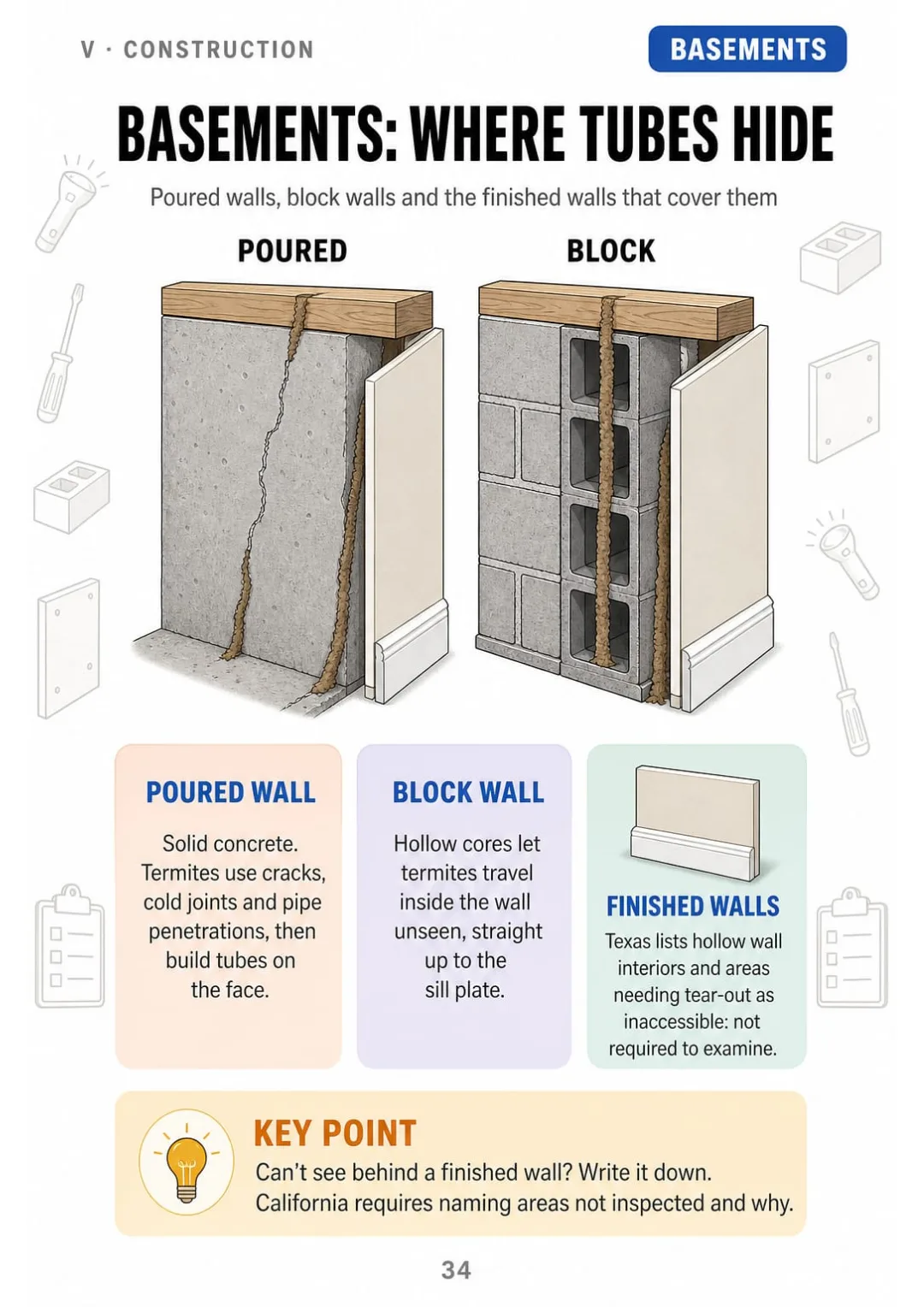
Poured vs. block basement walls: where mud tubes travel out of sight
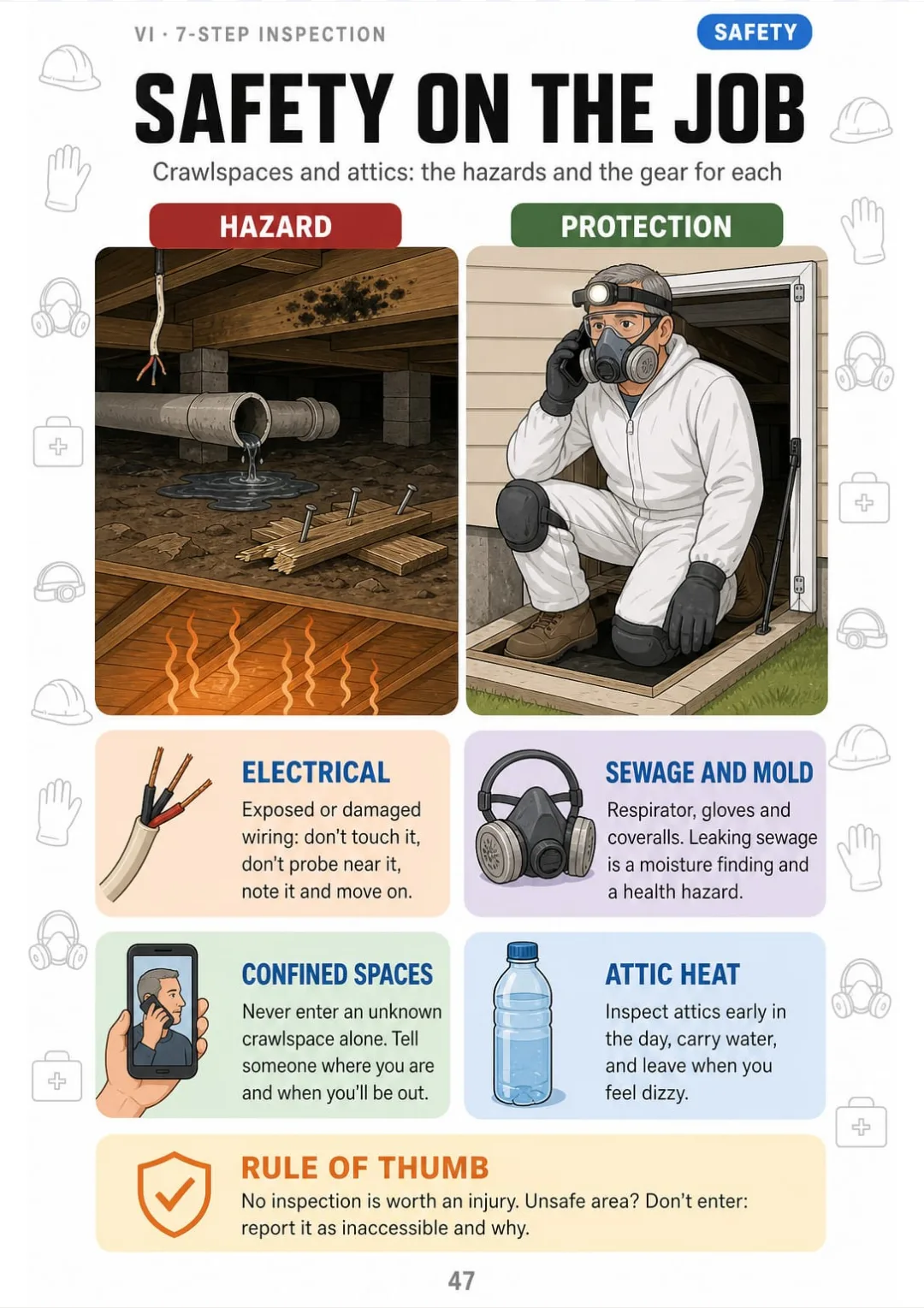
Wiring, sewage, mold, sharp debris, confined space and heat: the gear and the rules for each.
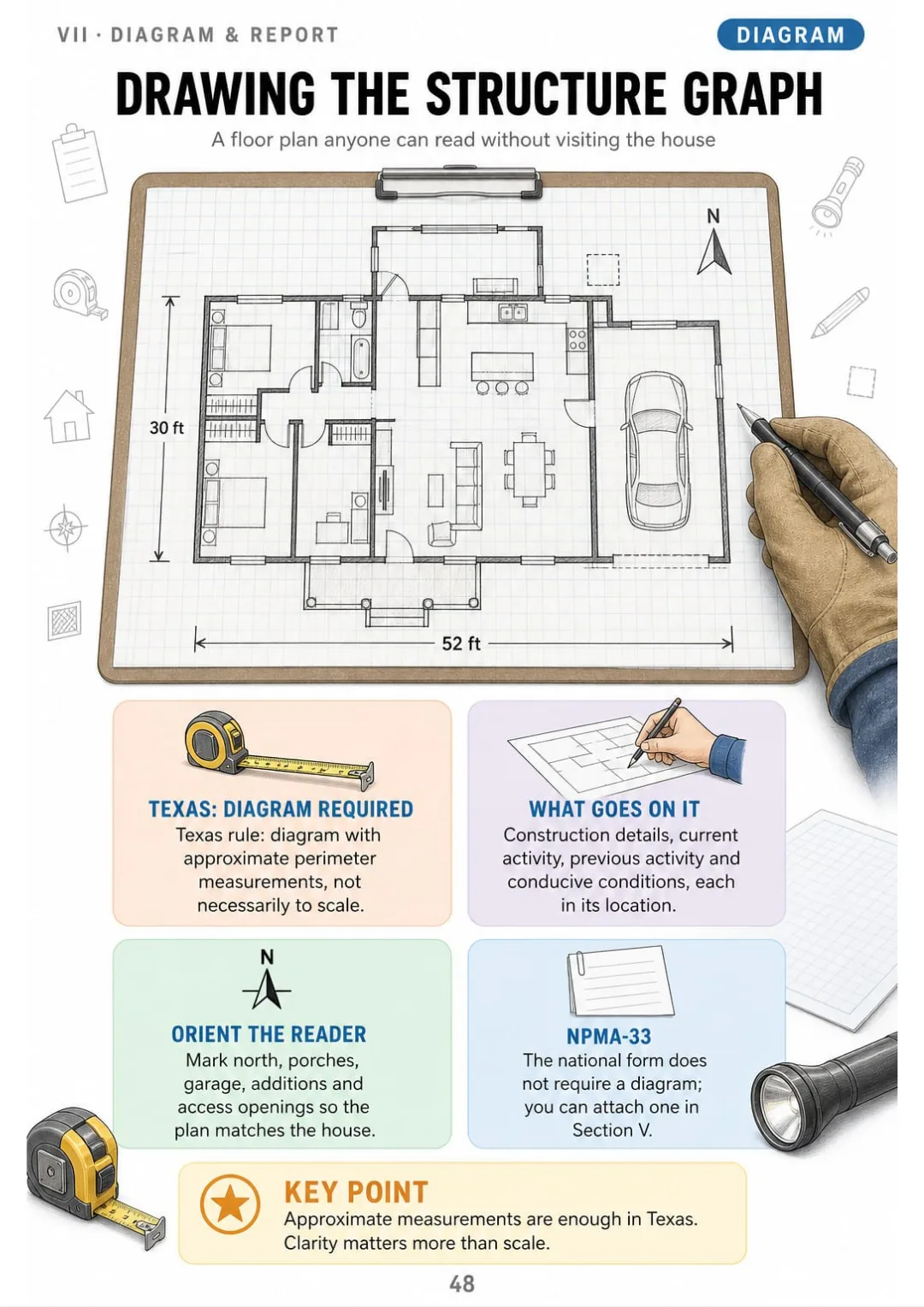
Texas requires a diagram with approximate perimeter measurements, not necessarily to scale.
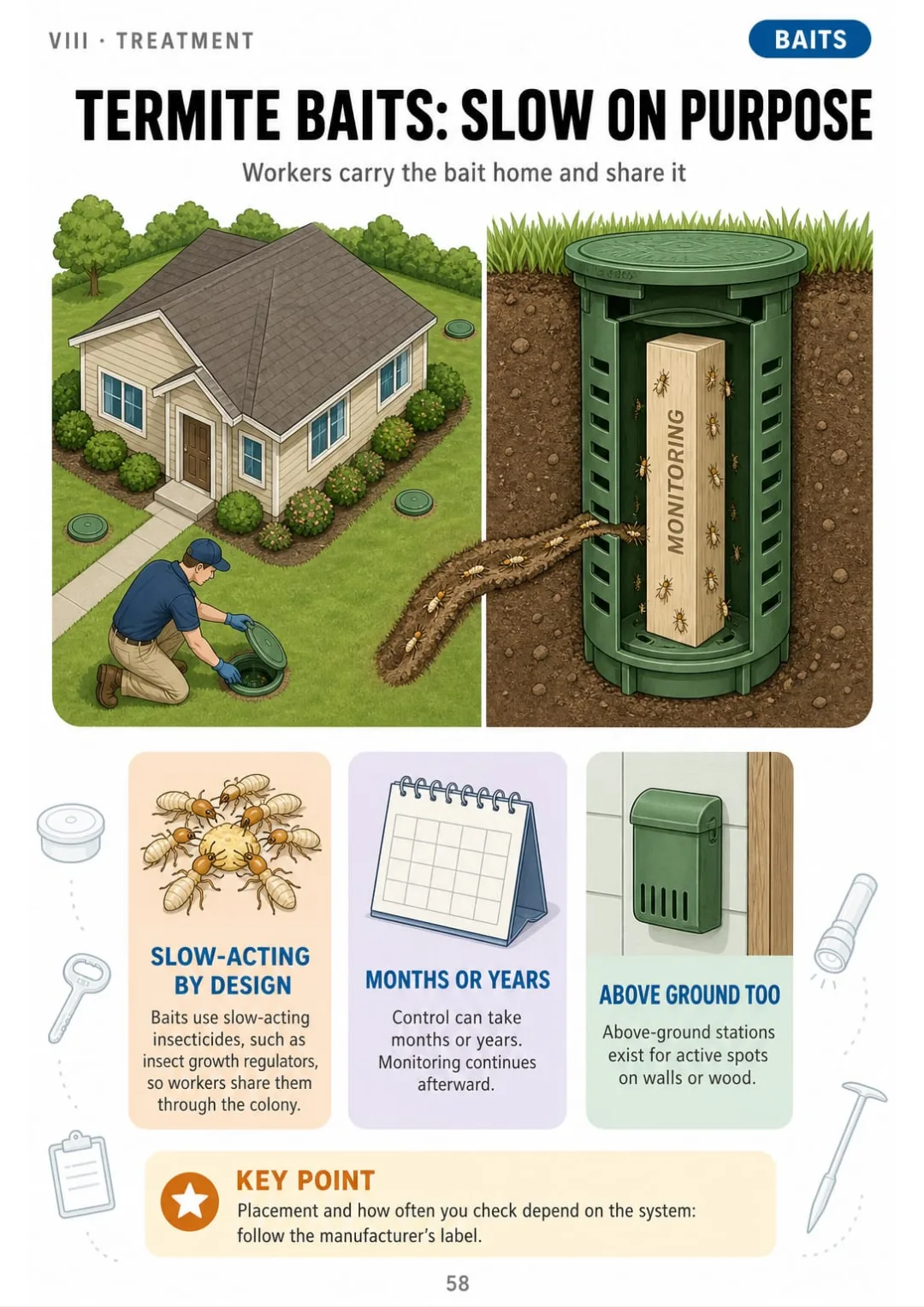
Slow-acting bait (often an IGR) shared by workers; control takes months or years, then monitoring

Swipe to see more →

These are real pages from the book. The table of contents is the full one: 9 parts and 61 topics.

The Problem Isn't You. It's How It Was Explained to You.

You're in the crawlspace with a flashlight, and there's a mud tube on the foundation wall. Is it a working tube, an exploratory tube or a drop tube?

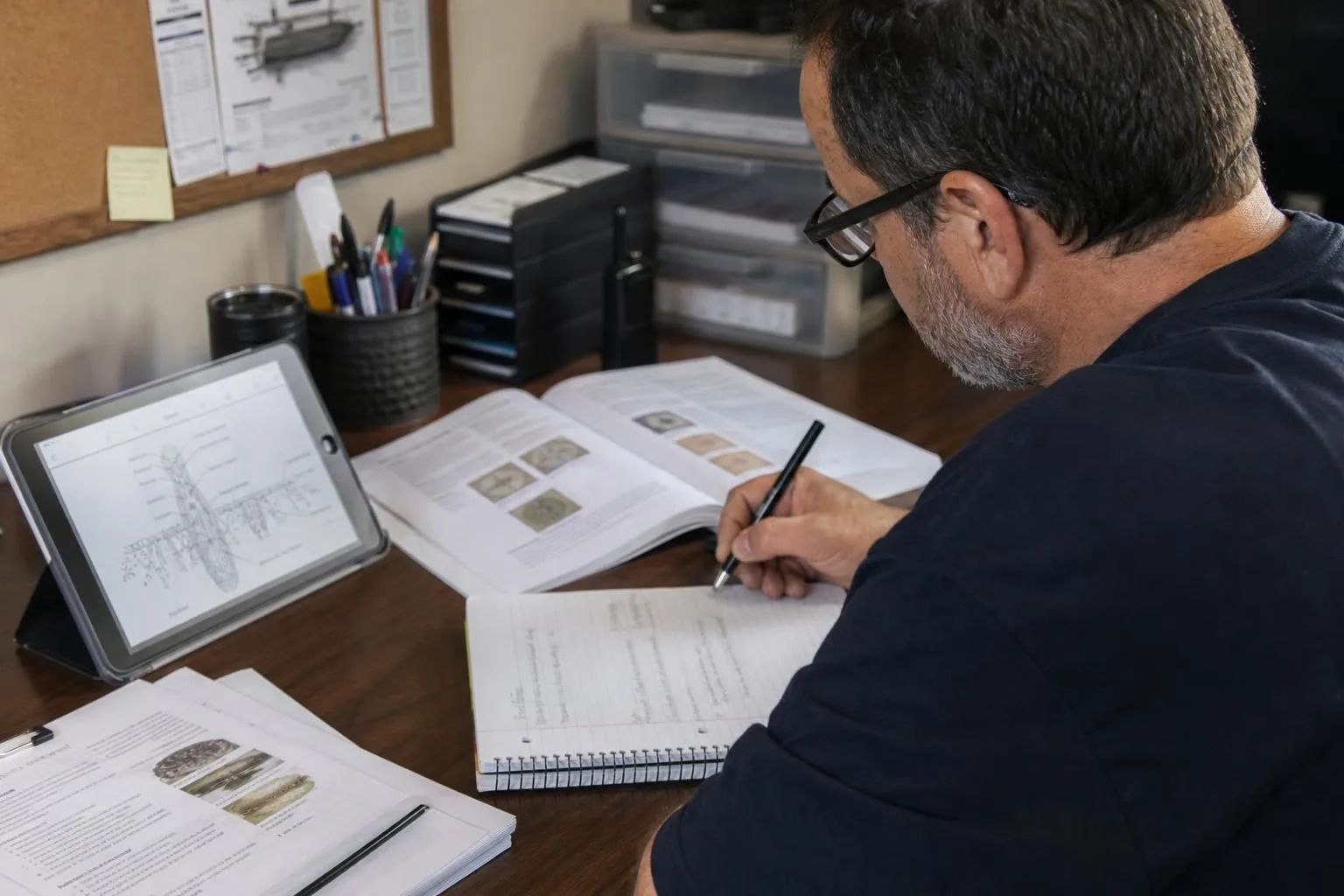
The study manual covers all four types in two long paragraphs, one after the other. Four tube names with nothing to hang them on, and by the next morning they've blurred into one.

Working, exploratory, drop and swarm tubes, each drawn on the foundation where you find it.

In the book, the 4 tubes are drawn on the foundation, right where you find them: the working tube running from soil to wood, the exploratory tube that never reaches wood, the drop tube hanging down from the wood, the swarm tube. You see the shape and you know which one it is.

Same with the rest: the 3 termite groups side by side, swarmer vs. flying ant, drywood pellets, the building parts on a cutaway, the 7-step inspection. Each one has its own page.

Next time you're under the house, you name the tube, you know what it means and you write your findings without going back to the manual.
COMPARE FOR YOURSELF

Same Topic, Two Ways to Study It

THIS
  • The manual: line after line
  • Termite groups explained only in words
  • You show up at the exam still unsure
Termites of structural importance in the United States are generally divided into three groups according to their nesting habits and moisture requirements. Subterranean termites nest in the soil and maintain contact with it, constructing shelter tubes and leaving soil in their galleries. Drywood termites live entirely within sound, dry wood, require no soil contact and expel characteristic fecal pellets through kick-out holes. Dampwood termites infest wood with high moisture content, often in contact with the ground or with decay, and are of limited structural importance in most regions.
FOR THIS
  • The 3 termite groups in one drawing
  • The key signs in a box
  • You see it and you get it
Soil in the gallery = subterranean; pellets = drywood: the whole group on one page.
CONTENTS

Take a Look at the 9 Parts and 61 Topics

Colony biology, termite ID, field signs, other wood destroyers, construction, the 7-step inspection, the diagram and report, treatment basics and review: 65 pages, all illustrated.

IHow a Termite Colony Works · pp. 5-9
  1. Why Termites Eat Wood
  2. The Castes: Worker, Soldier, Reproductive
  3. The Life Cycle From Swarm to New Colony
  4. Swarm Season: When and Why
  5. What Every Termite Needs: Food, Moisture, Shelter
IITelling the Termites Apart · pp. 10-16
  1. The 3 Termite Groups Side by Side
  2. Eastern Subterranean Termite
  3. Formosan Subterranean Termite
  4. Drywood Termites
  5. Dampwood Termites
  6. Termite Swarmer vs. Flying Ant
  7. Soldier Heads: The ID Shortcut
IIIReading the Signs in the Field · pp. 17-23
  1. The 4 Types of Mud Tubes
  2. Active or Old? Testing a Mud Tube
  3. Subterranean Damage Pattern
  4. Drywood Damage Pattern
  5. Drywood Pellets Up Close
  6. Shed Wings and Swarm Evidence
  7. Sounding and Probing Wood
IVOther Wood Destroyers and Look-Alikes · pp. 24-30
  1. What Counts as a WDI on the NPMA-33
  2. Carpenter Ants
  3. Carpenter Bees
  4. Powderpost Beetles: Lyctid and Anobiid
  5. Old House Borer
  6. Wood Decay Fungi
  7. Look-Alikes Page: Pellets, Frass, Sawdust
VConstruction and Conducive Conditions · pp. 31-38
  1. Building Terms You Need for the Exam
  2. Slab Construction: Monolithic, Floating, Supported
  3. Crawlspace Construction
  4. Basement Construction
  5. Earth-to-Wood Contact and Clearances
  6. Moisture: The #1 Conducive Condition
  7. Cellulose Debris and Form Boards
  8. Hidden Entry Points
VIThe Inspection in 7 Steps, Always in the Same Order · pp. 39-47
  1. The Method: 7 Steps in the Same Order
  2. The Tool Kit
  3. Step 1: Outside and Yard
  4. Step 2: Perimeter and Foundation
  5. Step 3: Crawlspace or Basement
  6. Step 4: Interior
  7. Step 5: Attic
  8. Inaccessible and Obstructed Areas
  9. Safety on the Job
VIIThe Diagram and the Report · pp. 48-54
  1. Drawing the Structure Graph
  2. Standard Diagram Symbols
  3. The NPMA-33: How the Form Is Organized
  4. Writing the Findings: Live, Dead, Damage
  5. Evidence of Previous Treatment
  6. State Reports: California, Florida, Texas
  7. Wording That Protects You
VIIITreatment Basics for the Exam · pp. 55-60
  1. Liquid Soil Treatment: Trench and Rod
  2. Repellent vs. Non-Repellent Termiticides
  3. Slab Drilling and Sub-Slab Treatment
  4. Termite Baits
  5. Drywood Treatments: Fumigation, Heat, Local
  6. Pre-Construction Treatment
IXReview and Frequent Mistakes · pp. 61-65
  1. The 3 Termites in One Table
  2. Frequent ID Mistakes
  3. Frequent Report Mistakes
  4. Key Numbers to Remember
  5. The 7-Step Inspection on One Page

One Page, One Topic, All Clear

Think of it this way:

You're in the attic of an older house. There's a small pile of pellets under a rafter, a few shed wings on the insulation, and the buyer's agent is texting you for the report.

In the book you open the drywood page: the pellets drawn next to the kick-out hole, so you match what you see. Another page shows swarmer vs. flying ant, so you know whose wings those are.

Poured vs. block basement walls: where mud tubes travel out of sight

Same with sounding and probing wood, subterranean vs. drywood damage, evidence of previous treatment and how to word live, dead or damage findings: each one on its own page.

Termite Inspection Illustrated is 9 parts and 61 topics, all drawn, and at the end a review section with the 3 termites in one table, frequent ID and report mistakes, key numbers and the 7-step inspection on one page.

What you see drawn, you don't have to memorize.

What's Inside Termite Inspection Illustrated:

Ipp. 5-9

How a Termite Colony Works

Why termites eat wood, the castes, the life cycle from swarm to new colony, swarm season and what every colony needs.

IIpp. 10-16

Telling the Termites Apart

The 3 termite groups side by side, Eastern and Formosan subterranean, drywood, dampwood, swarmer vs. flying ant and soldier heads.

IIIpp. 17-23

Reading the Signs in the Field

The 4 types of mud tubes, active or old, subterranean and drywood damage, drywood pellets, shed wings, sounding and probing.

IVpp. 24-30

Other Wood Destroyers and Look-Alikes

What counts as a WDI on the NPMA-33, carpenter ants and bees, powderpost beetles, old house borer, decay fungi and look-alikes.

Vpp. 31-38

Construction and Conducive Conditions

Building terms for the exam, slab, crawlspace and basement construction, clearances, moisture, cellulose debris and hidden entry points.

VIpp. 39-47

The Inspection in 7 Steps, Always in the Same Order

The 7-step method, the tool kit, each step from yard to attic, inaccessible areas and safety on the job.

VIIpp. 48-54

The Diagram and the Report

Drawing the structure graph, standard symbols, how the NPMA-33 is organized, live, dead or damage, previous treatment, CA, FL and TX reports and careful wording.

VIIIpp. 55-60

Treatment Basics for the Exam

Trench and rod, repellent vs. non-repellent, slab drilling, baits, drywood treatments and pre-construction, always by the label.

IXpp. 61-65

Review and Frequent Mistakes

The 3 termites in one table, frequent ID and report mistakes, key numbers and the 7-step inspection on one page.

At the end of the book: A review section with the 3 termites in one table, frequent ID and report mistakes, key numbers and the 7-step inspection on one page.

Plus: 2 Free Books

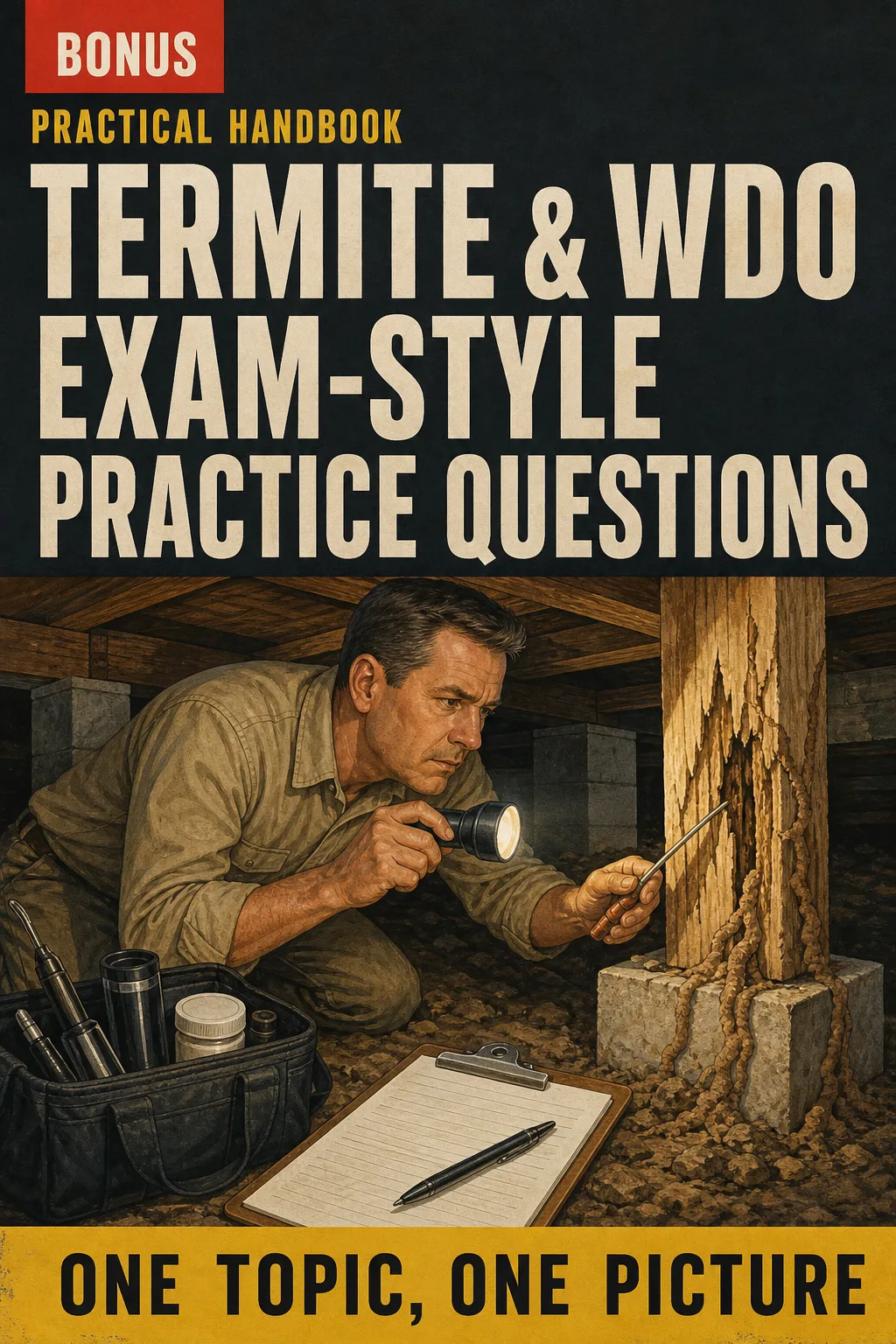
Termite & WDO Exam-Style Practice Questions

BONUS 1: «Termite & WDO Exam-Style Practice Questions»

Value on its own: US$ 17.90

Test yourself with exam-style questions on termite ID, signs, construction and treatment, each with the answer and the page to review.

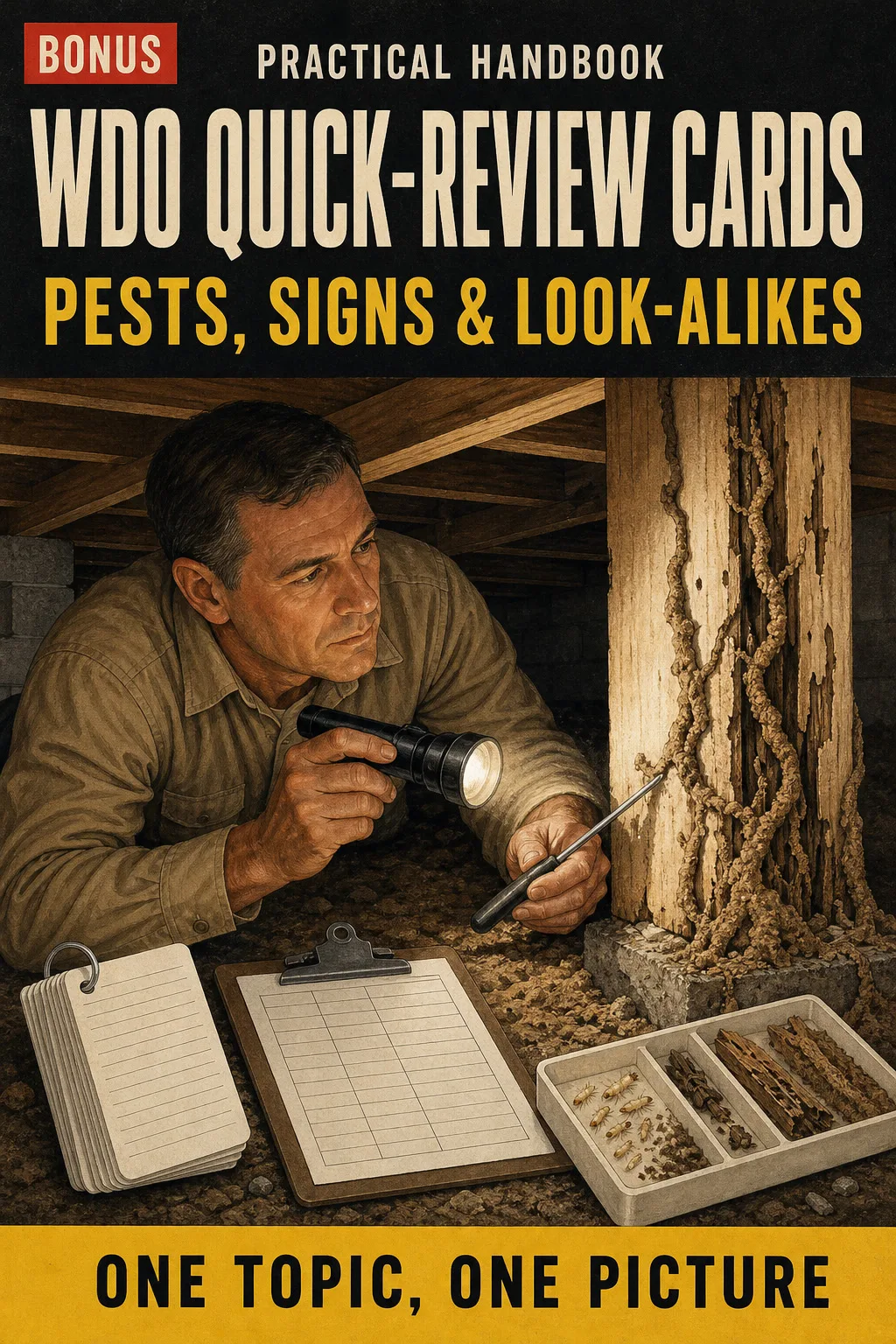
WDO Quick-Review Cards: Pests, Signs & Look-Alikes

BONUS 2: «WDO Quick-Review Cards: Pests, Signs & Look-Alikes»

Value on its own: US$ 14.90

Review the pests and their signs side by side on printable cards, so you stop mixing up drywood pellets, beetle frass and decay fungi.

Termite Inspection Illustrated with 2 Free Books

  • Termite Inspection Illustrated: 65 illustrated pagesUS$ 63
  • BONUS 1: Termite & WDO Exam-Style Practice QuestionsUS$ 17.90
  • BONUS 2: WDO Quick-Review Cards: Pests, Signs & Look-AlikesUS$ 14.90
  • High-resolution PDF to printIncluded
Total value US$ 95.80
YOUR PRICE:
US$ 27
You save US$ 68.80
YES, I WANT TERMITE INSPECTION ILLUSTRATED FOR US$ 27

📄 This is a digital PDF book sent to your email: nothing is printed or shipped.

Secure purchaseEncrypted payment30-day guarantee

PDF by email: We email you Termite Inspection Illustrated as a PDF, together with the two free books. It's a single payment: no installments, no extra charges.

Who This Book Is For

You're adding the termite category

You're adding the termite category

You know general pest control. The book gives you termites, signs and construction one page at a time, in a set order.

Your state exam is coming up

Your state exam is coming up

Review each topic at a glance, then test yourself with the practice questions and the quick-review cards.

You already do WDI inspections

You already do WDI inspections

Print the 7-step route, the look-alikes page and the report pages and keep them in the truck.

Everything You Get Today

US$ 95.80US$ 27
YES, I WANT TERMITE INSPECTION ILLUSTRATED FOR US$ 27

📄 This is a digital PDF book sent to your email: nothing is printed or shipped.

30DAYS
GUARANTEE

30-Day Guarantee

Try Termite Inspection Illustrated for 30 days, bonus books included.

We refund everything if the file won't open, if the book isn't what you see here, if you were charged twice or if the email doesn't arrive. Just email us.

You pay once. No subscriptions.

Frequently Asked Questions

Is it for me if I already work in pest control and now need the termite/WDO category?

Yes. It's built for techs adding termite work and for WDI inspectors. Termite ID, field signs, construction, the 7-step inspection and the NPMA-33 apply in any state. The state-specific report notes cover California, Florida and Texas only. Your own state's manual still sets your exam's rules.

Where does the content come from?

It's reviewed against state termite/WDO study materials (California Branch 3, Florida WDO, Texas termite category), the NPMA-33 inspection report, the International Residential Code (R317 and R408) and EPA-registered termiticide labels. The book explains how the report is organized and what goes in each section: always fill out the current form your state or company uses. Treatment pages explain methods, not product rates: the label on the product you use comes first.

Is this official material?

No. It's an independent illustrated study guide. It isn't issued or endorsed by any state agency, exam or association.

Does it replace the required course or training?

No. It helps you study and review. It doesn't give a certificate, a license or CE credits, and it doesn't replace state-required training, supervised field experience or the product label.

Are the practice questions the ones on the exam?

No. They're written for this book, in exam style, each with the answer and the page to review. They aren't official exam questions.

When and how do I get it?

As a PDF by email, together with the 2 bonus books.

Do I have to pay every month?

No. It's a one-time payment.

Can I have it on paper?

Yes. It's a printable PDF: print the whole book or just the pages you want to keep in the truck.

How does the refund work?

You have 30 days. We refund everything if the file won't open, if the book isn't what you see on this page, if you were charged twice or if the email doesn't arrive: just email us.

Before You Close This Page

No more rereading with nothing sticking.

Mud tubes, pellets and wings: you see them drawn, and that's it.

You walk into the exam knowing where everything is.

Drawings make studying faster.

The book is right below.

One-time payment: US$ 27 · Guarantee: 30 days · PDF by email

YES, I WANT TERMITE INSPECTION ILLUSTRATED FOR US$ 27

📄 This is a digital PDF book sent to your email: nothing is printed or shipped.